
What a 2017 RCT Tells Us About Acupuncture and Insomnia: A Practitioner's Reading
Not every study on acupuncture is worth paying attention to. A lot of the research often lacks rigorous controls, which makes it hard to know whether acupuncture is doing something specific or whether patients are simply responding to the attention and ritual of treatment.
This 2017 randomised controlled trial by Yin et al. stands out for two reasons: a sham-controlled design and objective sleep monitoring.

Yin, X, Gou, M, Xu, J, Dong, B, Yin, P, Masquelin, F, Wu, J, Lao, L & Xu, S 2017, ‘Efficacy and safety of acupuncture treatment on primary insomnia: a randomized controlled trial’, Sleep Medicine, vol. 37, pp. 193–200.
Why the study design matters
In sham-controlled acupuncture trials, participants in the control group receive a procedure that mimics acupuncture without inserting needles into actual acupuncture points. Participants are blinded to which group they are in. This design isolates the specific effect of acupuncture from the placebo response, which is genuinely difficult to do in acupuncture research given how much the therapeutic encounter itself can influence outcomes. Seventy-two patients with primary insomnia were randomly assigned into two groups, one receiving acupuncture treatment and the other receiving sham acupuncture. Treatment was given three times a week for four weeks, with patients wearing sleep monitors and completing questionnaires every two weeks for a total of eight weeks. Two things stand out about this design. The sham control addresses the placebo question. The objective sleep monitoring via actigraphy addresses the self-report bias question. Patients wearing sleep monitors can't unconsciously inflate their results the way they might on a questionnaire. When both subjective scores and objective metrics improve in the same direction, the findings carry more weight.
What the study found
The acupuncture group showed significant improvement in Insomnia Severity Index scores by two weeks into treatment, with those improvements continuing through a four-week follow-up period. Objective sleep metrics including sleep efficiency, total sleep time and number of awakenings all improved meaningfully in the acupuncture group.
Anxiety and depression scores also decreased, though these improvements were most pronounced during the follow-up period rather than immediately during the treatment phase. In practice this matches what patients tend to report. Mood and stress levels often shift after a course of treatment rather than during it, and the gains can be harder to maintain when the lifestyle driving the stress hasn't changed.
What the research suggests about mechanism
The study doesn't measure neurotransmitters directly, so its findings are limited to clinical outcomes. The broader mechanistic research does offer some context. Acupuncture has been associated with increased GABA and decreased glutamate levels, which would support a calming effect on the nervous system. Acupuncture-induced enhancement of vagal-adrenal axis activity may create a neurochemical environment that supports sleep-promoting pathways, alongside suppression of HPA-axis hyperactivity. These are proposed mechanisms from separate research rather than findings of this specific trial, and they remain areas of active investigation.
Where the study has limits
The authors acknowledge several limitations and they are worth being honest about.
The sample size of 72 is relatively small. The eight-week total timeframe doesn't tell us much about whether the gains hold over months or years. The participants' mental and emotional states weren't fully controlled, which is a challenge in any sleep study given how closely mood and sleep are connected.
The most clinically relevant limitation from my perspective is the standardised point protocol. In this trial, all participants in the acupuncture group received the same points. In real-life practice, insomnia doesn't present as a single pattern. Someone whose sleep difficulties are driven by Liver Qi stagnation, waking through the night, vivid dreams, difficulty switching off after a stressful day, would be approached differently from someone presenting with Heart-Spleen deficiency, fatigue, a quiet persistent worry, light unrefreshing sleep. A standardised protocol can't capture that differentiation, which means the trial likely underestimates what acupuncture can do when treatment is genuinely tailored to the individual.
For a fuller picture of how Chinese medicine differentiates insomnia patterns clinically, the main insomnia article on this site goes into more detail.
On frequency and real-world practice
The study protocol used three sessions per week for four weeks, which is a relatively intensive schedule. In practice, most patients can commit to weekly sessions rather than three times per week. I'd encourage twice weekly where possible, particularly in the early stages of treatment, but the reality is that weekly is what most people can sustain.
The research gap between protocol frequency and clinical reality is worth acknowledging honestly. The outcomes in a trial using three sessions per week may not directly translate to outcomes in a patient coming weekly. Consistency over time matters more than frequency in isolation, but the evidence base tends to reflect more intensive treatment schedules than most practitioners actually deliver.
What this means in practice
This study adds to a growing body of evidence that acupuncture produces specific, measurable effects on sleep quality beyond placebo. It's not conclusive and it's not the final word. But for a condition where the main pharmaceutical options carry real risks of dependence and residual daytime sedation, a well-designed trial showing meaningful improvements in sleep efficiency and anxiety without adverse effects is clinically relevant.
If sleep has been a persistent problem and you're curious about whether acupuncture might be worth trying, a conversation in clinic is a reasonable place to start.
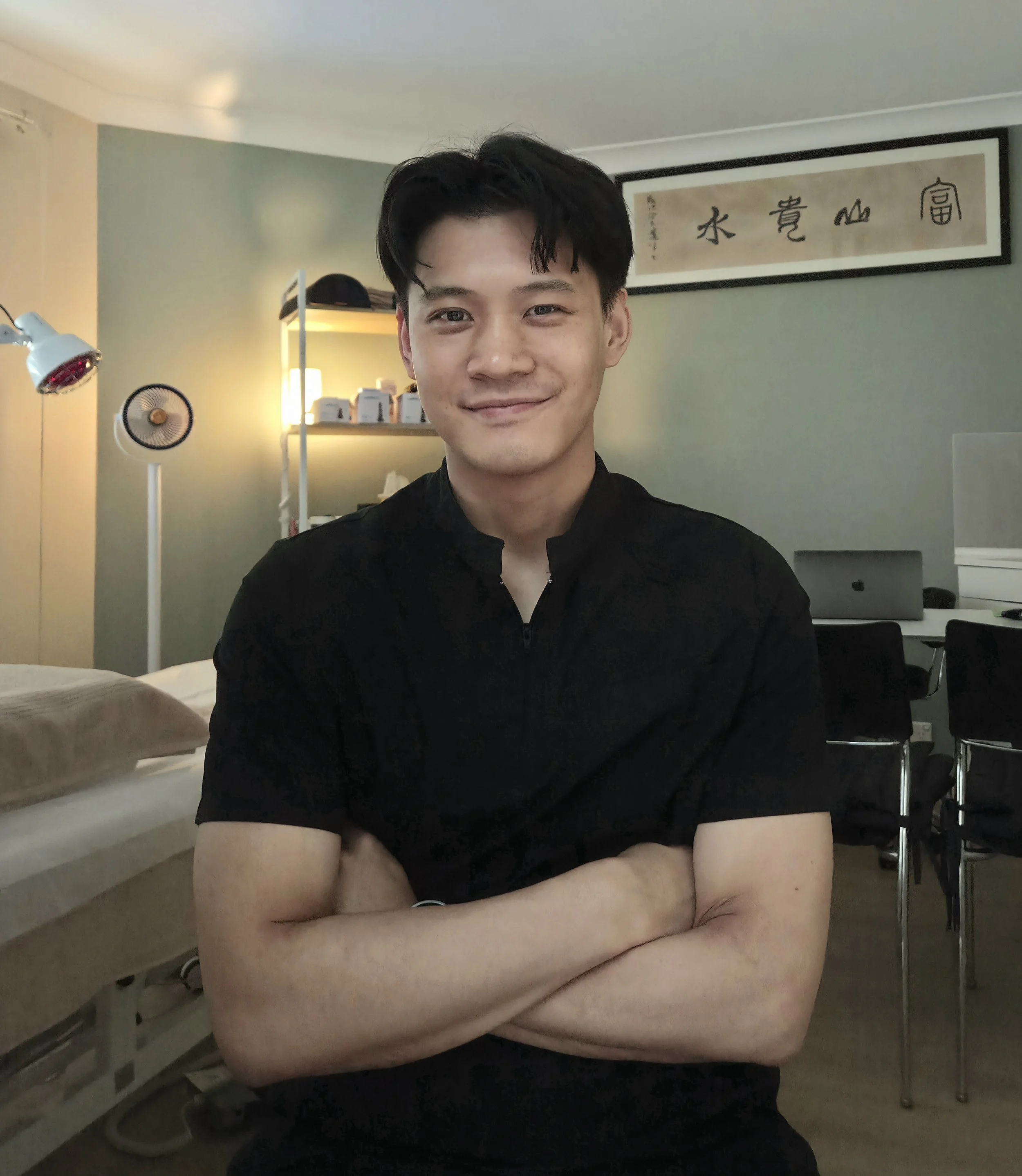
About Brandon Lau
Brandon is a registered Acupuncturist and Chinese Herbal Medicine Practitioner based in Castle Hill, Sydney. He holds a Bachelor of Health Science in Traditional Chinese Medicine from UTS and a Bachelor of Medical Sciences from Macquarie University, and is registered with AHPRA under the Chinese Medicine Board of Australia.
His approach draws on both Chinese medicine and biomedical understanding, with a particular interest in musculoskeletal conditions, stress-related presentations and internal health. He practises at Brandon Lau Acupuncture in Castle Hill and KO Healing Acupuncture in North Ryde.